Reading with ADHD
Reading with ADHD is genuinely hard — not laziness, not an excuse. Here's why the ADHD brain struggles with text, and what actually helps.
Why ADHD makes reading harder
Sustained attention
Staying focused on a text for more than a few minutes is genuinely hard with ADHD — not for lack of willpower, but because the brain involuntarily loses the thread. The words stay in front of the eyes, but the mind has already moved on.
Working memory
Remembering what happened three chapters ago, who that minor character is, or what the main argument was — all of that depends on working memory, which is especially compromised in ADHD.
Trouble starting
"I'll read it later," repeated for weeks. Starting a task perceived as hard or boring is one of the toughest parts of ADHD. The book sits on the nightstand for months.
Hyperfocus or abandonment
With ADHD, reading rarely lands in the middle: either the person hyperfocuses and reads 200 pages in a day, or drops the book on page 30 and never picks it back up.
Fragmented comprehension
It's possible to reach the end of a paragraph and have absorbed nothing — the eyes moved across the words but the processing never happened. It takes rereading, more than once.
Strategies that work
Short sessions with a timer
A reading pomodoro: 20 minutes focused, 5 minutes off. Removing the pressure of "I need to read for hours" cuts down on the trouble starting.
A summary before you start
Reading a chapter summary before diving into the original text activates the mental schema — the brain already knows where to "hang" the information that comes next.
Taking notes as you go
Highlights and quick notes while reading create an external "second brain" — something to check later without relying on working memory.
Auto-scroll and continuous reading
Text that scrolls automatically at a fixed pace reduces the effort of self-control and keeps reading speed steady.
Chat with the book
"What happened in chapter 5?" or "who is that character who just showed up?" — being able to ask the book directly removes the barrier of rereading to find information.
Small, visible goals
A goal of 20 min/day instead of "finish the book." A daily streak and a chapter progress bar are concrete cues the ADHD brain responds to.
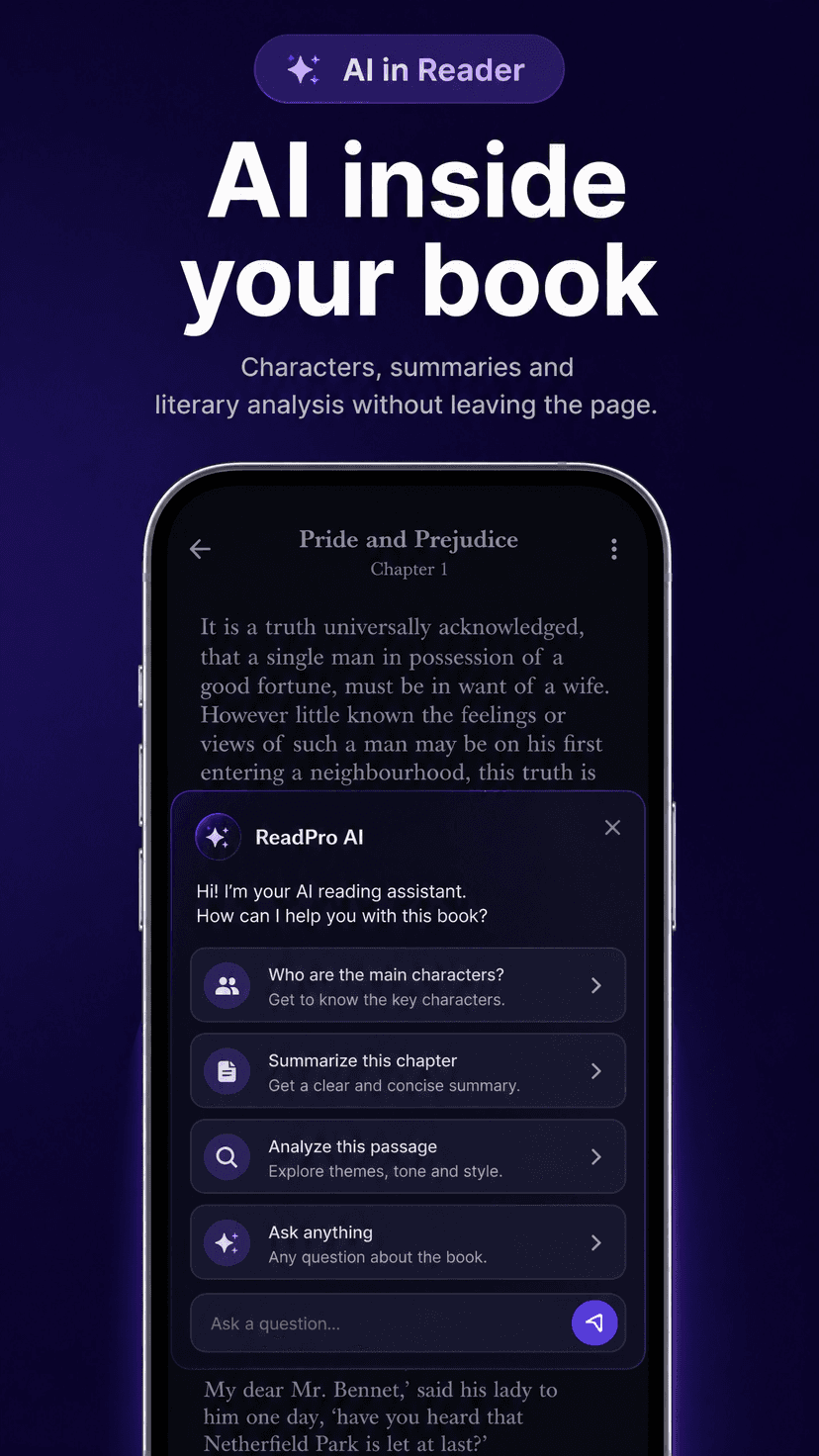
ReadPro
A reader built for people who struggle to focus
Chapter summaries before you read, a chat with the book for quick questions, auto-scroll and daily goals. Everything the ADHD brain needs to actually finish a book.
Get ReadPro Free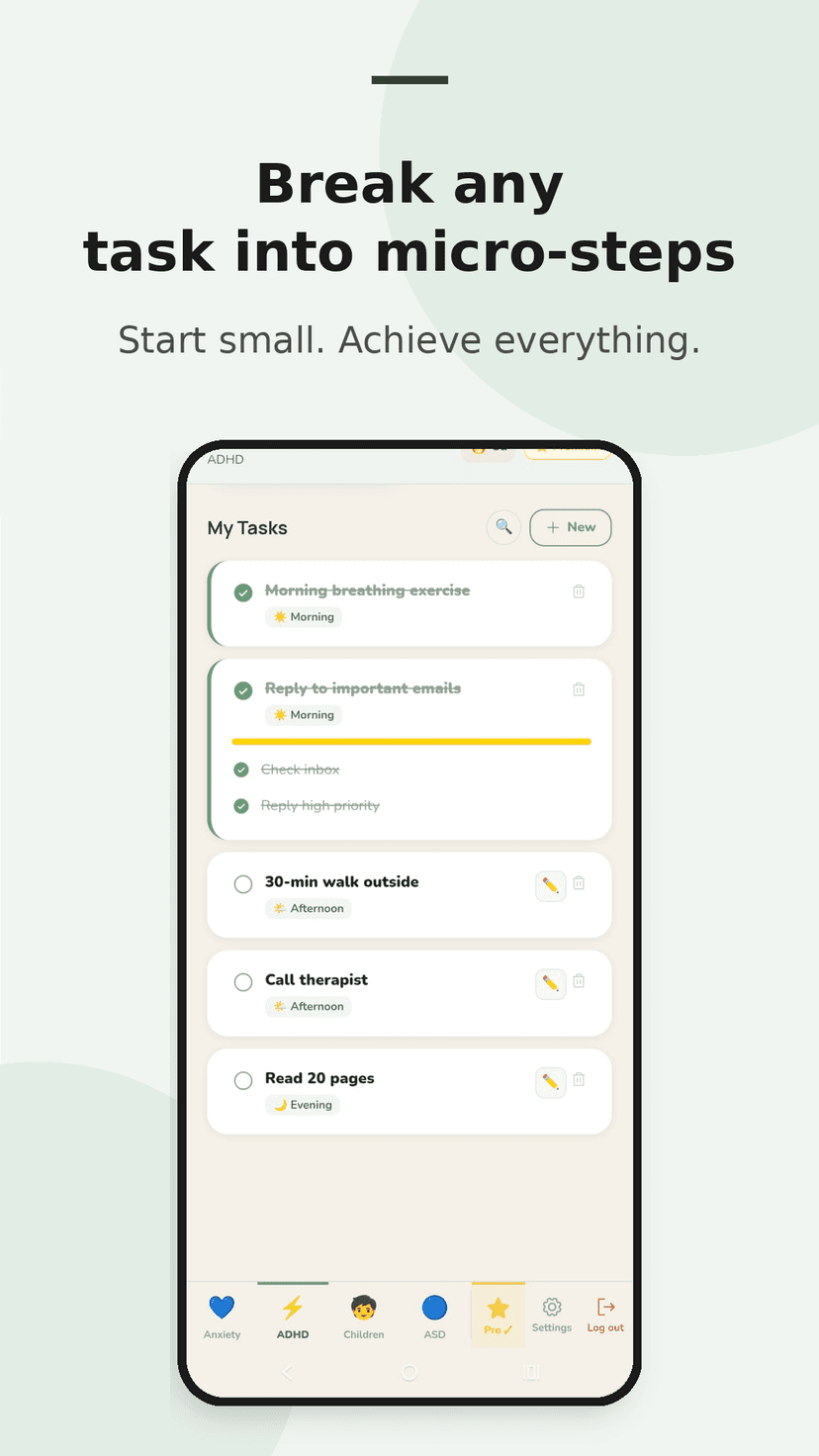
Balanced Mind
An app that supports ADHD
A planner, micro-steps, an energy map and a mental health AI — full support for everyday life with ADHD, beyond reading.
Use it for freeFrequently asked questions
Can people with ADHD finish whole books?
Yes — many people with ADHD are avid readers, especially when they find the right genre (often a hyperfocus topic) or the right tools. The difficulty is real, but it's not an absolute block.
Are audiobooks better than text for ADHD?
It depends on the person. Some people with ADHD focus better on audio, others get distracted more easily because they lose their place and can't easily "scroll back up." Text with AI support (summaries, chat) tends to be more flexible.
Does ADHD interfere with reading comprehension?
Comprehension itself is usually fine when there's focus — the problem is sustaining that focus long enough. Tools that reduce the working-memory load (summaries, notes) compensate a lot.
What kind of book is easiest to read with ADHD?
Short chapters, an engaging narrative, direct language and genuinely interesting topics. Practical non-fiction with a clear structure (bullet points, lists) tends to be more accessible at first than dense fiction.