Dyslexia and Reading
Dyslexia isn’t laziness or a lack of intelligence — it’s a neurological difference in how letters are processed. Here’s what actually helps.
What dyslexia is
Decoding difficulty
Dyslexia affects phonological processing — the ability to link letters to sounds and assemble words. It isn’t a vision problem or a matter of intelligence.
Slow, effortful reading
What’s automatic for other readers takes conscious effort for someone with dyslexia, which drains cognitive energy and makes reading exhausting.
Comprehension is preserved
Intelligence and content comprehension are normal or above average in most people with dyslexia — the barrier is decoding, not understanding.
Frequent overlap with ADHD
About 40% of people with ADHD also have dyslexia. The combination compounds reading barriers and calls for support on both fronts.
Tools that make reading more accessible
OpenDyslexic-style fonts
Fonts created specifically for dyslexia: letters with weighted bottoms that anchor visual orientation, reducing reversals and confusion between b/d/p/q.
Increased line spacing
More space between lines reduces interference between them and makes it easier to track a line while reading.
Larger font size
Bigger letters reduce decoding effort and visual fatigue. Worth adjusting per book or document when the option exists.
Auto-scroll
The screen scrolls automatically at an adjustable pace — it removes manual tracking and lets you focus on the text as it moves.
Chapter summaries (AI)
Reading a summary before a chapter activates mental context, which makes decoding much easier because the brain already knows what to expect from the text.
Color themes
A cream/sepia background reduces the harsh black-on-white contrast that can increase visual stress for people with dyslexia.
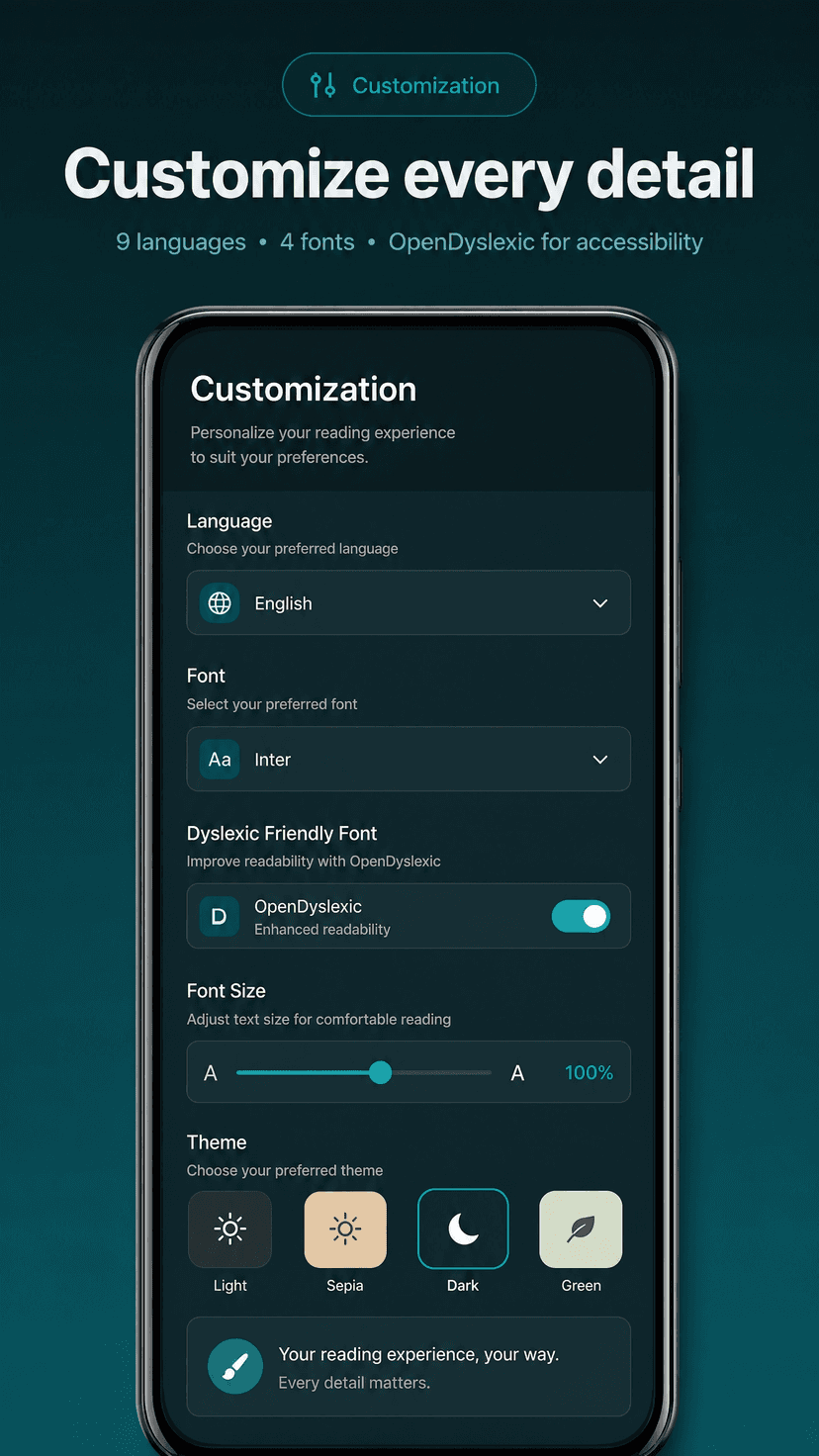
ReadPro
Dyslexia-friendly font + AI summaries
A dyslexia-friendly font, line spacing, sepia theme, auto-scroll and AI chapter summaries — every reading accessibility tool in one app.
Free on Android.
Get It FreeBalanced Mind · App
Support for neurodivergent minds
Mood tracking, an emotional journal and AI support for hard days. Built for people with ADHD and anxiety — which frequently coexist with dyslexia.
Open Balanced MindFrequently asked questions
Does the OpenDyslexic font really help?
The scientific evidence is mixed, but many people with dyslexia report a subjective improvement in reading comfort. Since it’s free and adjustable, it’s worth testing — what matters is what works for you.
Is there a cure for dyslexia?
It isn’t a disease, so there’s no "cure". With early intervention, the right techniques and support tools, most people with dyslexia learn to read proficiently. The goal is accessibility, not eliminating the trait.
Can someone with dyslexia succeed academically?
Absolutely. Many scientists, writers and leaders have or had dyslexia. Early diagnosis, accommodations (extra time on tests, use of digital tools) and the right support make all the difference.
Are ADHD and dyslexia the same thing?
No — they’re distinct conditions with different causes and mechanisms, but they frequently coexist. ADHD affects attention and impulse control; dyslexia affects phonological processing and letter decoding. Someone with both needs targeted support for each.